
Cognitive Behavioral Therapy in Burlington, NJ
Cognitive behavioral therapy (CBT) is a structured, evidence-based form of psychotherapy that helps people understand how their thoughts, emotions, and behaviors influence one another. By identifying unhelpful patterns and practicing healthier responses, individuals can develop practical skills for managing anxiety, depression, trauma, substance use, and other challenges.
What Is Cognitive Behavioral Therapy?
Cognitive behavioral therapy is a goal-oriented form of psychotherapy that focuses primarily on current thoughts and behaviors. CBT was developed in the 1960s and has become one of the most widely researched approaches to mental health treatment.
CBT is based on the idea that thoughts, feelings, and behaviors are connected. When unhelpful thoughts influence emotions and behaviors, they can reinforce patterns that contribute to distress. CBT helps individuals recognize these patterns and develop more balanced ways of thinking and responding.
Treatment is collaborative. The therapist and client work together to identify goals, practice strategies, and evaluate progress.
The Connection Between Thoughts, Emotions, and Behaviors
The cognitive behavioral model explains how these three areas interact:
- Thoughts: Automatic beliefs or interpretations about yourself, other people, or situations
- Emotions: Feelings that may develop in response to those thoughts
- Behaviors: Actions or reactions influenced by thoughts and emotions
For example, someone who thinks, “I am going to fail,” may experience anxiety and avoid preparing for an important event. CBT can help the person examine that thought, consider the available evidence, and develop a more balanced perspective that supports healthier action.
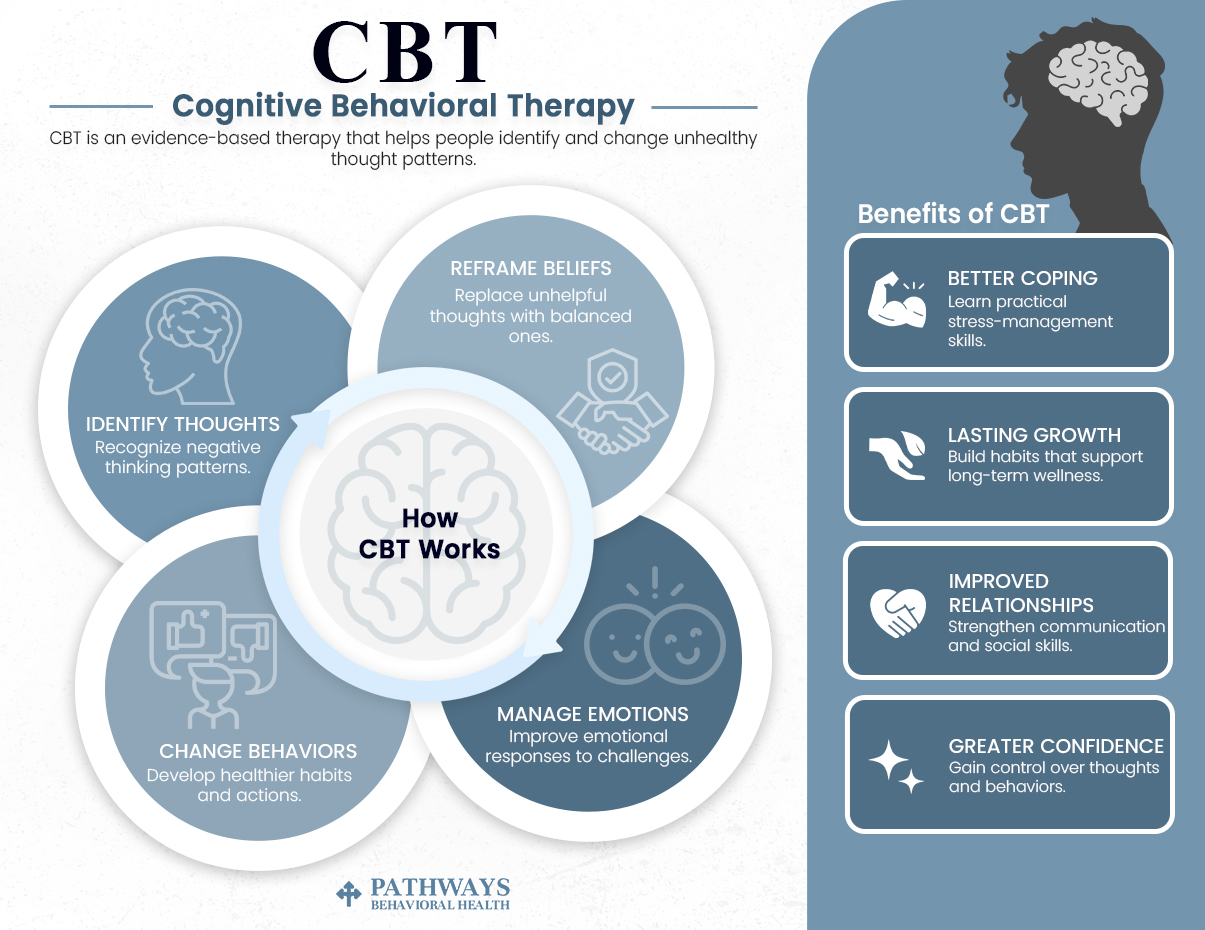
How Cognitive Behavioral Therapy Works
CBT gives individuals practical tools for recognizing patterns and changing responses. Sessions are typically structured around specific goals rather than simply discussing problems without a plan.
CBT helps people notice automatic thoughts that contribute to emotional distress. These thoughts may involve catastrophizing, all-or-nothing thinking, overgeneralizing, or assuming they know what others are thinking.
Recognizing these patterns is an important first step toward changing them.
Once an unhelpful thought is identified, the therapist and client can examine whether it is accurate, realistic, and useful. The goal is not to replace every negative thought with forced positivity. Instead, CBT focuses on developing a more balanced and evidence-based perspective.
Thoughts and behaviors can reinforce one another. Avoiding situations may temporarily reduce anxiety but can make fear stronger over time. CBT can help individuals gradually replace avoidance and other unhelpful behaviors with healthier responses.
Cognitive behavioral therapy is highly practical. Therapists may provide exercises such as thought records, behavioral experiments, activity scheduling, relaxation techniques, or coping practice between sessions.
Using these skills outside therapy helps individuals apply what they learn to real-life situations.
Conditions Treated With CBT
Cognitive behavioral therapy can be used for a wide range of mental health and behavioral health concerns.
CBT can help individuals with generalized anxiety disorder, panic disorder, social anxiety, phobias, and related concerns. Treatment may focus on identifying fearful thoughts, reducing avoidance, and developing strategies for managing physical and emotional symptoms.
CBT for depression often focuses on negative thought patterns, low motivation, withdrawal, and behaviors that reinforce depressed mood. Behavioral activation may help individuals gradually reconnect with meaningful activities and routines.
Trauma-focused cognitive behavioral approaches can help individuals address distressing thoughts, memories, avoidance, and emotional responses associated with traumatic experiences. Treatment is adapted to the individual’s needs and should be provided by appropriately trained professionals.
CBT is also widely used in addiction treatment. It can help individuals recognize the thoughts, emotions, situations, and triggers associated with substance use.
Clients can learn to identify high-risk situations, manage cravings, develop coping strategies, and create relapse prevention plans. CBT may be combined with medication-assisted treatment and other recovery services when appropriate.
Even when someone does not have a specific psychiatric diagnosis, CBT skills can help with stress management, emotional regulation, problem-solving, and healthier responses to difficult situations.
Common Cognitive Behavioral Therapy Techniques
CBT involves several techniques that can be adapted to the individual’s goals and symptoms.
Cognitive restructuring helps individuals examine inaccurate or unhelpful thoughts and replace them with more balanced interpretations. This can reduce the emotional impact of habitual negative thinking.
Behavioral activation is commonly used for depression. It involves gradually increasing participation in meaningful, healthy, or rewarding activities, even when motivation is low.
Exposure-based CBT techniques may be used for anxiety-related conditions and certain trauma symptoms. Under professional guidance, individuals gradually confront feared situations or memories rather than relying on avoidance.
Clients can learn practical strategies for managing stress, difficult emotions, cravings, and challenging situations. These skills may include breathing exercises, problem-solving, communication strategies, mindfulness, and grounding techniques.
Benefits of Cognitive Behavioral Therapy
Cognitive behavioral therapy offers several potential benefits for individuals who are appropriate candidates for this approach.
CBT can help people:
- Recognize patterns that contribute to emotional distress
- Develop healthier coping skills
- Reduce symptoms of anxiety and depression
- Improve emotional regulation
- Change unhelpful behaviors
- Strengthen problem-solving skills
- Develop relapse prevention strategies
- Apply therapeutic skills to everyday situations
Because CBT emphasizes practical skills, individuals can continue using the techniques learned in therapy after formal treatment becomes less frequent.
What to Expect During CBT Sessions
Starting therapy can feel uncertain, but understanding the process can make it easier to participate.
Treatment generally begins with an assessment of symptoms, history, current challenges, and goals. The therapist uses this information to develop an individualized plan.
Sessions often involve reviewing progress, identifying a specific challenge, practicing a CBT technique, and establishing strategies to use between sessions.
Clients are encouraged to participate actively in the process. The therapist provides guidance, but progress also depends on practicing skills outside of sessions.
Progress can be evaluated through discussion, symptom tracking, treatment goals, and standardized assessments when appropriate. Treatment may be adjusted as needs change.

How Long Does Cognitive Behavioral Therapy Take?
There is no universal CBT timeline. Cognitive behavioral therapy is often considered a relatively short-term treatment, but the number of sessions varies based on the condition, symptom severity, treatment goals, and individual progress.
Some people may benefit from a course of weekly sessions over several months, while others with more complex conditions may require longer-term therapy or additional services.
The goal is not simply to complete a predetermined number of sessions. Treatment should continue for as long as clinically appropriate to help the individual build and maintain meaningful improvements.
CBT and Dual Diagnosis Treatment
Mental health conditions and substance use disorders often occur together. When they do, treating one concern while ignoring the other can make recovery more difficult.
CBT can be incorporated into dual diagnosis treatment in New Jersey to address both mental health symptoms and behaviors related to substance use. For example, a person may learn to recognize anxious thoughts that contribute to alcohol use while developing healthier strategies for managing stress.
Pathways Behavioral Health can integrate CBT into a broader treatment plan designed around co-occurring mental health and substance use needs.
CBT in Outpatient Behavioral Health Care
Cognitive behavioral therapy is well suited to outpatient treatment because individuals can practice skills in their everyday environment between sessions.
Outpatient care allows clients to remain at home while receiving scheduled therapy and other behavioral health services. This can make treatment easier to balance with work, school, family, and other responsibilities.
Pathways Behavioral Health provides outpatient behavioral health services designed to deliver structured, personalized care while helping individuals remain connected to their communities.

Cognitive Behavioral Therapy at Pathways Behavioral Health
Pathways Behavioral Health provides cognitive behavioral therapy in Burlington, NJ as part of its behavioral health treatment services. The clinical approach is personalized to each individual’s needs rather than relying on a standard treatment plan.
Treatment may incorporate CBT alongside individual therapy, group therapy, family support, medication management, and other appropriate services. Explore mental health therapy services at Pathways Behavioral Health.
Why Choose Pathways Behavioral Health in Burlington, NJ?
Finding the right therapist and treatment environment can make a meaningful difference in the recovery process. Pathways Behavioral Health focuses on compassionate, evidence-based care that recognizes each person’s circumstances and goals.
Treatment begins by understanding the individual’s symptoms, history, needs, and goals. CBT strategies can then be selected and adapted based on what the person is experiencing.
Mental health concerns can affect relationships, physical health, work, and daily functioning. Pathways Behavioral Health takes a broader approach that can address multiple areas of well-being through coordinated services.
Outpatient therapy allows appropriate individuals to receive professional support while continuing many of their daily responsibilities. This can make ongoing treatment more sustainable.
To learn more about the organization and its approach, visit the About Pathways Behavioral Health page or explore available programs.


Cognitive Behavioral Therapy FAQs
CBT has been extensively studied for anxiety and depression and is a commonly recommended evidence-based therapy for both. Treatment focuses on the thought and behavioral patterns that contribute to symptoms.
Yes. CBT is commonly incorporated into treatment for substance use disorders. It can help individuals identify triggers, manage cravings, develop coping strategies, and reduce behaviors associated with substance use.
Yes. CBT can be used alongside psychiatric medication when clinically appropriate. A therapist and prescribing provider can coordinate care as part of a comprehensive treatment plan.
Yes. CBT can be provided within outpatient behavioral health programs, allowing individuals to participate in therapy while continuing to live at home and manage many daily responsibilities.
CBT primarily focuses on current thoughts, emotions, behaviors, and challenges. Past experiences may be discussed when they help explain current patterns, but treatment generally emphasizes developing practical strategies for creating change in the present.
A mental health professional can help determine whether CBT is appropriate based on your symptoms, diagnosis, treatment history, and goals. CBT may be especially useful for people who want a structured, skills-based approach to managing mental health or behavioral health concerns.
Start Cognitive Behavioral Therapy in New Jersey
You do not have to manage anxiety, depression, trauma, substance use, or persistent emotional distress alone. Cognitive behavioral therapy can provide practical tools for understanding patterns, changing behaviors, and developing healthier ways to respond to challenges.
Pathways Behavioral Health in Burlington, New Jersey, provides personalized CBT as part of comprehensive behavioral health care. Contact Pathways Behavioral Health to learn more about cognitive behavioral therapy and determine whether it may be an appropriate part of your treatment plan.

Born and raised in New Jersey, Rebecca is a Licensed Social Worker (LSW) with a deep commitment to supporting individuals and families through life’s most challenging seasons. With a strong clinical background in hospital-based case management, she brings valuable experience from a wide range of healthcare and community settings. As a licensed social worker, Rebecca is known for her compassionate, client-centered approach, strong advocacy skills, and calm presence during times of crisis. Whether helping clients navigate complex systems or providing emotional support, her work is grounded in empathy, professionalism, and a genuine passion for improving lives.
